CASE STUDY | ON-PAGE SEO | HEALTHCARE | LOCAL SEARCH
How a full on-page build, content architecture, metadata, heading structure, and internal linking, produced first-page rankings for a plastic surgery practice entering a competitive local market from zero organic presence.
3rd
Position for primary target keyword
295
Impressions in first 3 months
2%
CTR growing as positions consolidate
8.9
Average position across all queries
CONTEXT
This is an ongoing freelance engagement with a plastic surgeon in Queretaro, Mexico, preparing to launch his independent practice after completing his hospital residency. The website had been built gradually over approximately a year but had received no structured SEO work, no keyword strategy, no optimized content, no metadata, and no internal linking architecture.
The brief was to build the on-page SEO foundations from scratch: define the keyword targets, structure the content around them, and establish the relevance signals that would allow the site to compete in a local market where established practices have domain age and review volume on their side.
STARTING POINT
No keyword strategy, no optimized metadata, no structured content, the site existed but was invisible in search
THE CHALLENGE
Healthcare local SEO is competitive. Established practices have domain history, reviews, and existing authority. Ranking a new site requires precise on-page execution to compete on relevance signals alone.
STRATEGY APPROACH
A new site competing in local healthcare has limited options. It can’t manufacture domain authority or build a backlink profile quickly. What it can control completely is on-page relevance, how clearly the content signals what the practice does, where it does it, and for whom.
The prioritization decision was clear: build the on-page foundations so precisely that the site wins on relevance even without authority. In local search, a new site with accurate keyword targeting and clean technical structure can outrank older sites that hold positions by inertia. That was the strategy, and the primary keyword reached position 3 within the first month.
Link building and schema markup are the planned next phases. The decision to start with on-page was deliberate, there is no value in earning links to pages that aren’t yet optimized. The heading structure implemented here was also built with FAQ schema in mind, so phase two is a direct continuation rather than a retrofit.
EXECUTION
Identified primary and secondary keywords for each service, procedures, consultations, and location-specific terms. Mapped search intent per query: informational, navigational, and transactional. Each page was built around one primary intent to avoid cannibalization and give Google a clear signal about what each URL is for.
Wrote all page content from scratch, service pages, about page, and consultation page. Structured to satisfy both user intent and crawler understanding: primary keyword in the first 100 words, supporting terms distributed naturally, E-E-A-T signals (credentials, experience, location) embedded throughout. In healthcare YMYL content, how authority is demonstrated on the page is an on-page decision, not just a content one.
Wrote meta titles following the pattern: [Primary keyword] | [Differentiator] | [Location], under 60 characters, primary term front-loaded. Meta descriptions written as conversion copy rather than keyword summaries: they answer the implicit question "why click this result instead of the one above or below."
Single H1 per page containing the primary keyword in natural form. H2s structured around the secondary questions a user searching that term would have, which also prepares the content for FAQ schema in the next phase. H3s provide supporting detail without diluting the H2 focus. This structure serves traditional SEO and GEO/AEO readability simultaneously.
Built a deliberate link structure from the ground up: homepage links to all service pages with keyword-aligned anchor text; service pages link to related procedures and to the consultation page; the consultation page, the primary conversion point, receives internal links from every other page on the site. Breadcrumb navigation implemented throughout.
RANKING RESULTS
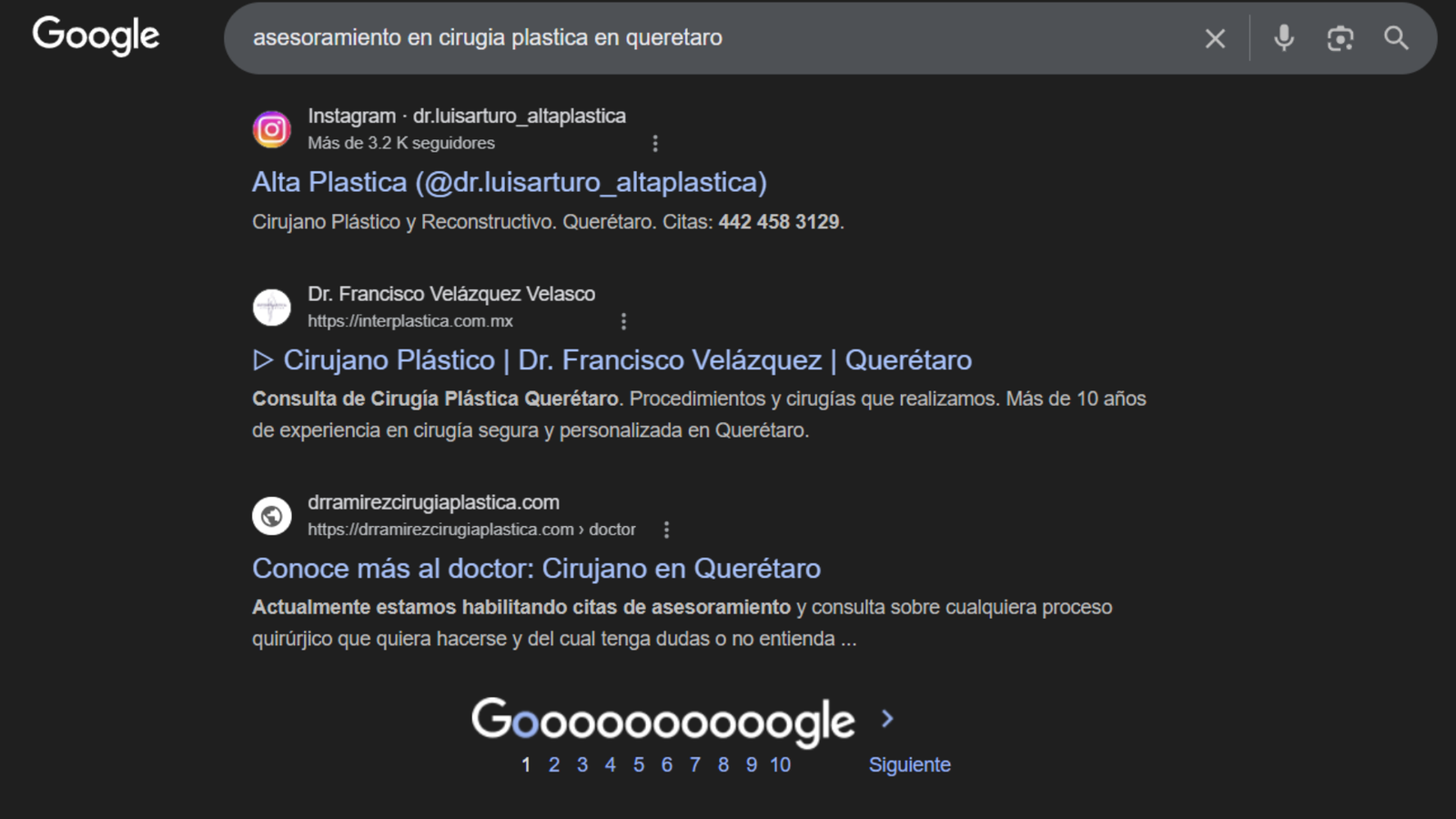
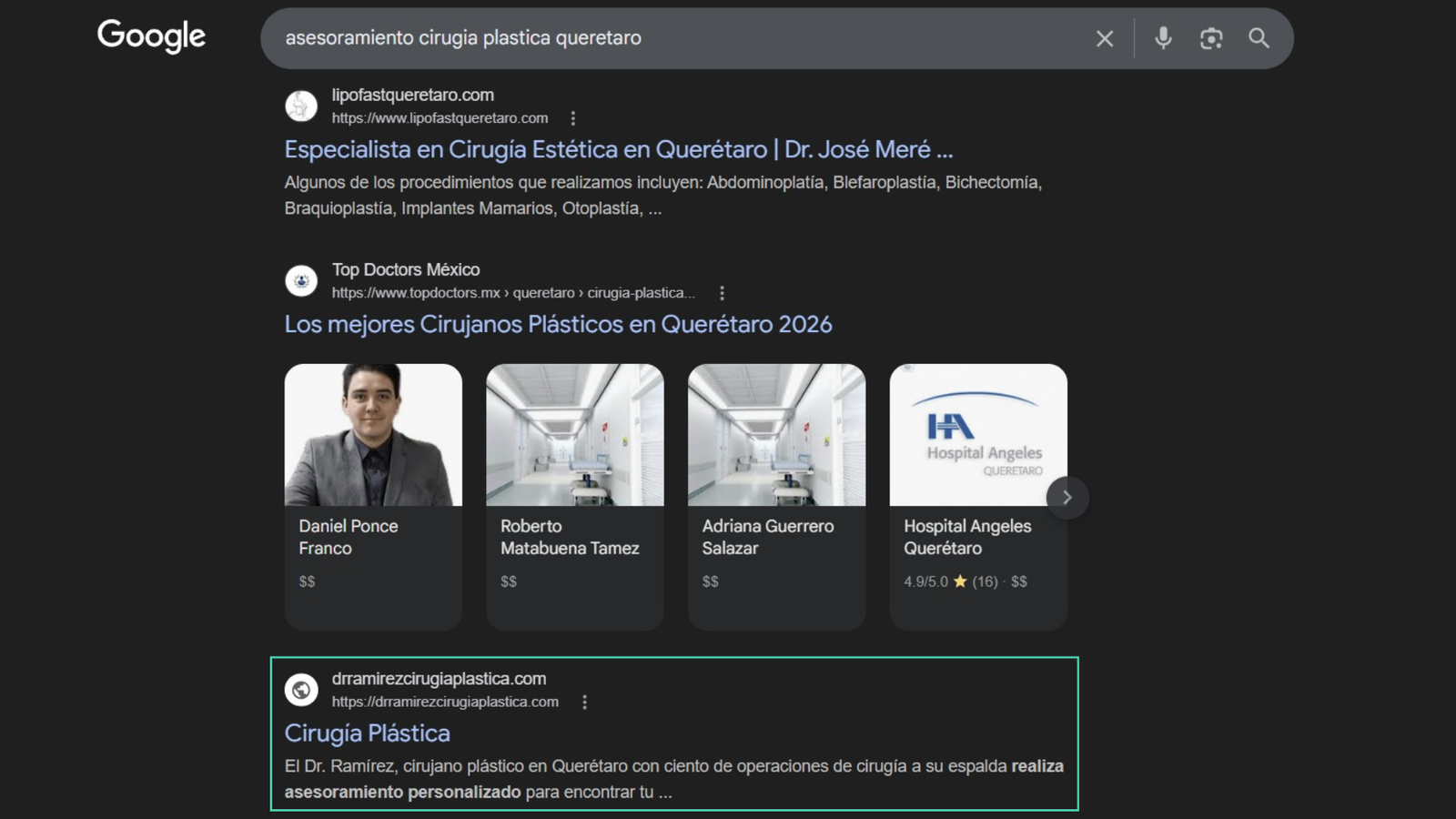
Within three to four weeks of completing the on-page build, the site reached position 3 on Google for the primary target keyword, in a local market where competing results include established practices with significantly more domain history.
CURRENT POSITION FOR TARGET KEYWORD:
CURRENT POSITION FOR TARGET KEYWORD:
| Element | Before | After |
|---|---|---|
| Meta titles | Missing, no keyword targeting | Keyword-first, location-specific, under 60 characters |
| H1 structure | Missing H1, others with multiple | Single H1 per page, primary keyword in natural form |
| Page content | Thin text and no keyword or intent alignment | Full copy written around search intent with E-E-A-T signals |
| Internal linking | No structured linking between pages | Full architecture, every page connected with contextual anchors |
| Meta descriptions | Auto-generated, no click-through optimization | Written as conversion copy, action-oriented |
RESULTS
These numbers reflect the first three months of a site that had zero organic presence before the on-page work began. The volume is modest, but the trajectory and position data tell the more important story: the site is ranking, generating impressions, and consolidating positions across multiple queries simultaneously.
TOTAL IMPRESSIONS – FIRST 3 MONTHS
From zero. The site now appears in search results across the full target keyword set, visibility that did not exist before the on-page build. As positions consolidate and schema markup is added in phase two, both impressions and CTR are expected to grow significantly.
From zero. The site now appears in search results across the full target keyword set, visibility that did not exist before the on-page build. As positions consolidate and schema markup is added in phase two, both impressions and CTR are expected to grow significantly.
3rd
PRIMARY KEYWORD POSITION
Page 1, position 3 for “asesoría de cirugía plástica en Querétaro”, reached in 3–4 weeks.
8.9
AVERAGE POSITION
Across all tracked queries, multiple keywords already in or near the first page, with clear room to consolidate.
2%
CTR
Early stage, CTR improves as positions move toward the top 3, which is already happening for the primary keyword.
NEXT PHASE
The on-page foundations are in place. Continue creating pages and content. The next two phases are already planned and the groundwork for both was built into the current structure.
MedicalBusiness, LocalBusiness, and FAQPage structured data, for traditional rich results and for GEO/AEO visibility in AI-powered search. The H2/H3 heading structure built in phase one was designed with FAQ schema in mind.
Google Business Profile optimization, local citation building, and a structured approach to earning the first patient reviews, the off-page signals that will amplify the on-page foundations already in place.
TAKEWAYS
Want to see the organic growth or technical SEO case studies?