CASE STUDY | E-COMMERCE | SEO
How I reduced a custom apparel company’s reliance on Google Ads by rebuilding their organic presence from the ground up, using only free tools.
+211%
Organic traffic growth in 12 months
3% → 12%
Organic share of total traffic
~99%
Reduction in paid traffic dependency
CONTEXT
I was brought in as the in-house SEO with a single, clearly defined objective: reduce the company’s dependence on paid search by building a sustainable organic channel. At the time, the site was almost entirely reliant on Google Ads, paid traffic and referrals accounted for roughly 80% of all visits, with organic representing less than 3%.
The business understood this was a structural risk. Every sale was either bought or borrowed. The goal was to change that distribution within a 12-month horizon.
TOTAL TRAFFIC AT START
Paid (Google Ads) and Referral
ORGANIC AT START
No meaningful organic presence
CONSTRAINTS
The company had no budget for SEO tooling. Ahrefs, Semrush, and Screaming Frog were off the table. I had access to Google Search Console, Google Analytics, Google Ads Keyword Planner, and Lighthouse, nothing else.
This was a useful constraint. It meant every decision had to be driven by first-party data and strong fundamentals, with no shortcut to insight. The GSC + GA stack, used rigorously, was sufficient to identify what to fix, what to write, and what to prioritize.
Known site issues at the start, thin or duplicate content across most product and category pages, unoptimized meta tags, crawl errors and redirect chains, poor internal linking structure, mobile usability problems, and slow load times from uncompressed images.
STRATEGY
Fixed 404 errors and redirect chains. Submitted clean sitemaps. Removed low-value URLs that were diluting crawl budget. Resolved mobile usability flags from GSC. This was the prerequisite, content work doesn't compound if the crawl is broken.
Rewrote product and category descriptions with long-tail keyword targeting informed by GSC impression data and Keyword Planner. Standardized meta titles and descriptions across the catalog. Added alt text to all images. Restructured heading hierarchies.
Used GSC's CTR and impression data to identify which pages had traction but poor click-through, these were prioritized for optimization before pursuing new keywords. Used Keyword Planner to find adjacent long-tail terms aligned to the product catalog.
Built logical link paths between category and product pages. Implemented breadcrumb trails and contextual anchor text to help crawlers understand page hierarchy and distribute link equity to the pages that mattered most.
Identified high-bounce pages via GA and audited them with Lighthouse. Compressed images and removed render-blocking scripts to improve load times. Rewrote CTAs and content layout on underperforming pages.
RESULTS
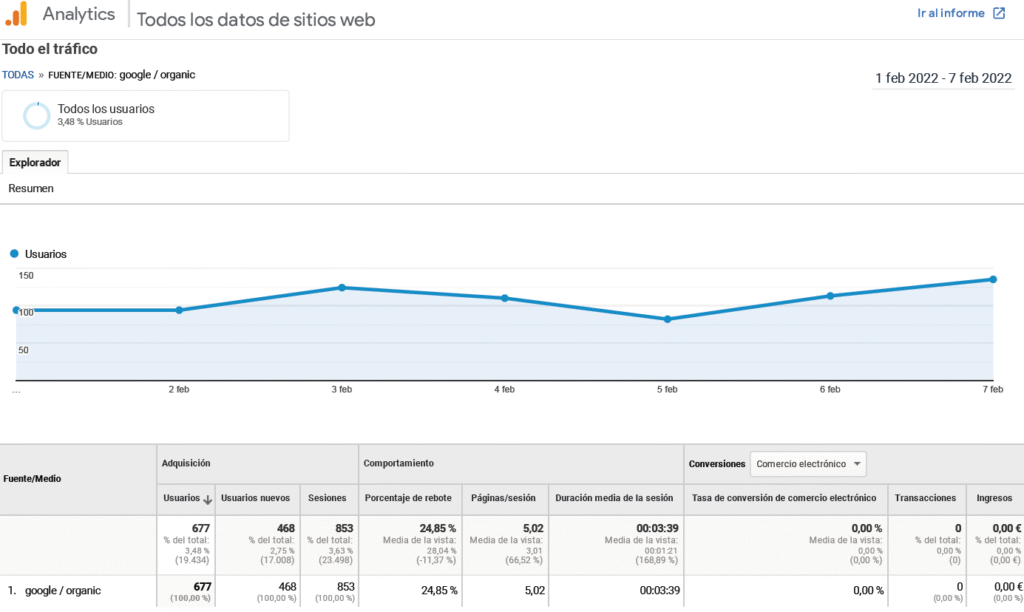
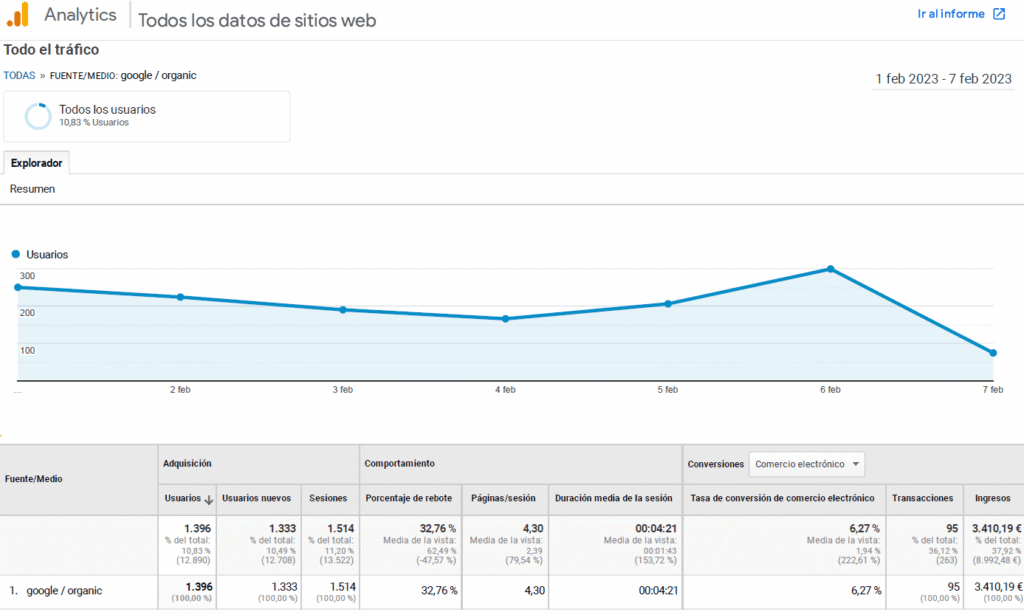
Relative organic sessions grew by 211% year-over-year, in relative terms, measured against equivalent date ranges to control for seasonal peaks (Christmas, Mother’s Day…).
Relative organic sessions grew by 211% year-over-year, in relative terms, measured against equivalent date ranges to control for seasonal peaks (Christmas, Mother’s Day…).
Today, the remaining URLs is 0 and the URLs blocked are 888 [Picture 3].
ORGANIC SHARE (END)
Up from ~3% at the start of the engagement
*Pictures 1 & 2
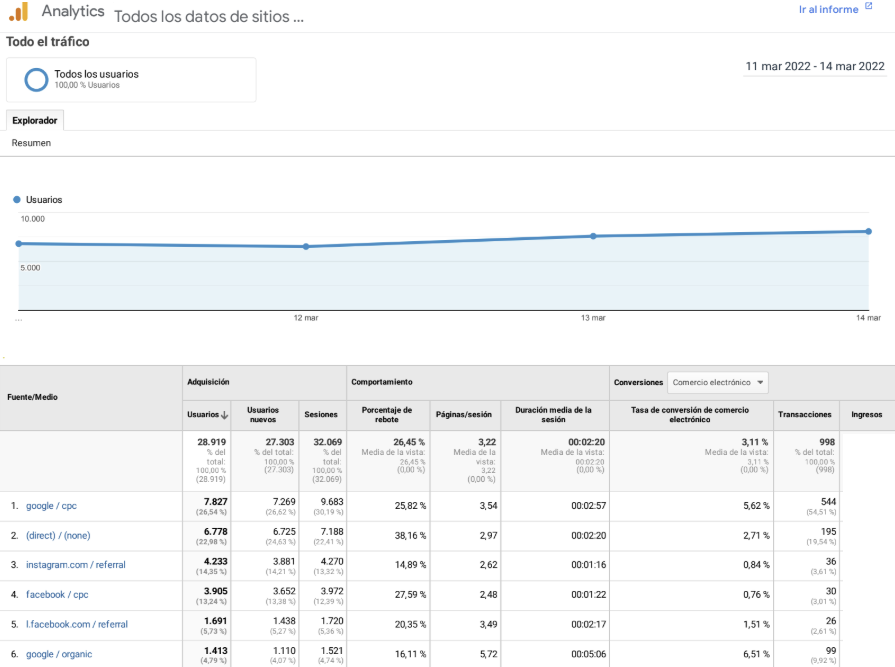
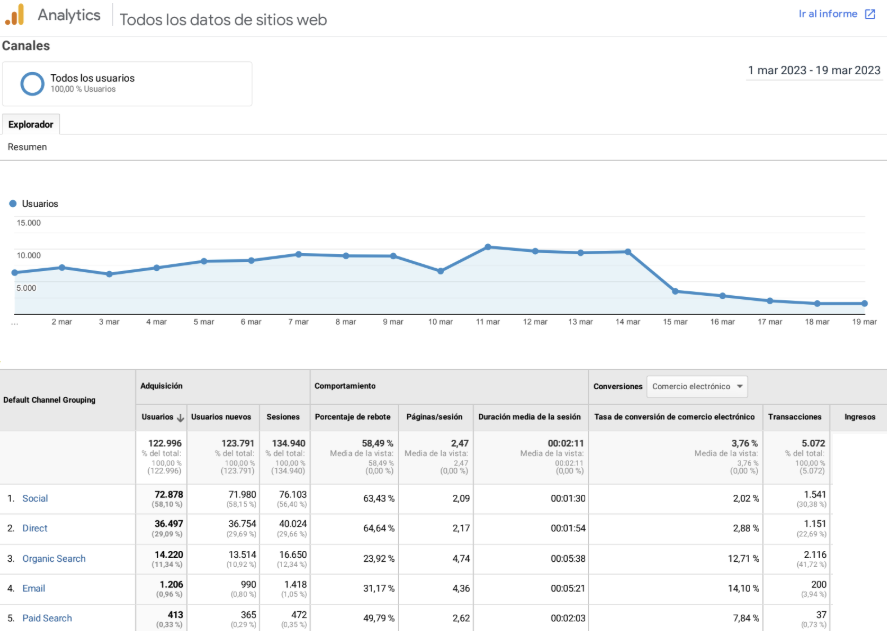
PAID SHARE (END)
Down from ~27%, the primary goal, achieved within the 12-month scope.
*Pictures 3 & 4
TAKEWAYS
SEO fundamentals at scale, without tool dependency. The entire engagement ran on GSC, GA, and Lighthouse. The constraint forced a methodology grounded in first-party signals, which is increasingly how large-scale SEO operates as third-party data becomes less reliable.
Business-oriented framing from day one. The goal was never “rank for keywords”, it was reduce paid dependency and improve traffic ROI. Every technical and content decision was evaluated against that business outcome.
Cross-functional execution. Technical SEO, content strategy, keyword research, internal linking, and UX optimization, run by one person, coordinated around a single measurable objective.